
Rajasthan
Jaipur
The Pink City — gateway to royal Rajasthan
Photo: A.Savin (FAL), via Wikimedia Commons
Overview
About Jaipur
Rajasthan’s capital and the busiest gateway into the state, Jaipur is where most royal-Rajasthan itineraries begin. Founded in 1727 by Maharaja Sawai Jai Singh II, its old city is laid out on a precise grid and painted the terracotta pink that gives it its nickname — a UNESCO World Heritage old city still lived in, not preserved as a museum piece.
Jaipur rewards two to three full days: one for Amber Fort and the Aravalli-hill forts above the city, one for the old city itself (City Palace, Hawa Mahal, Jantar Mantar) and its bazaars, and a spare half-day for Nahargarh Fort at sunset.
- Amber Fort, best visited at opening time before the coach tours arrive
- City Palace, still home to the Jaipur royal family in its private wing
- Hawa Mahal’s honeycomb sandstone facade, photographed best from across the street at sunrise
- Jantar Mantar, Sawai Jai Singh II’s working 18th-century astronomical observatory
- Johari Bazaar and Bapu Bazaar for gems, block prints and juttis
Top attractions
What to see in Jaipur
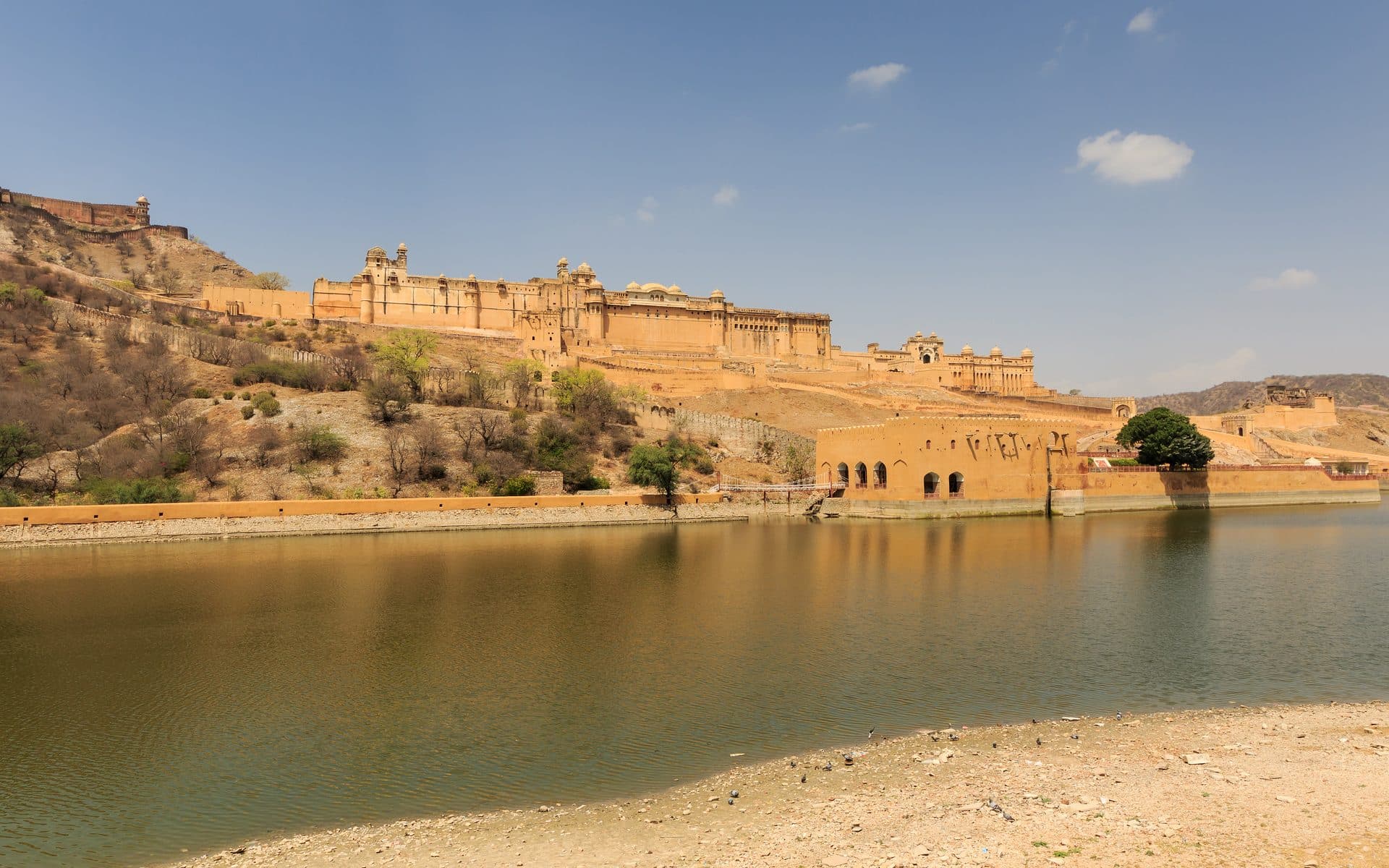
Amber Fort
A hilltop fort-palace of pale yellow and pink sandstone, overlooking Maota Lake, with elephant and jeep rides up to the entrance.
City Palace
A sprawling complex of courtyards, gardens and museums that is still part royal residence.
Hawa Mahal
The five-story "Palace of Winds," built so royal women could watch street life unseen from 953 small windows.
Jantar Mantar
A UNESCO-listed collection of stone astronomical instruments, including the world’s largest stone sundial.
Nahargarh Fort
A ridge-top fort with the best sunset views over Jaipur’s pink skyline.
Things to do
Experiences in Jaipur
Elephant or jeep ride at Amber Fort
Choose the (more animal-welfare-friendly) 4x4 jeep option up the fort ramp.
Sunrise at Hawa Mahal
The facade glows warm pink in early morning light, and the street is nearly empty.
Chandra Mahal wing tour
A guided add-on inside City Palace’s private royal apartments.
Evening at Chokhi Dhani
A cultural village resort just outside the city with folk dance, puppetry and a traditional thali dinner.
When to go
Best time to visit
October to March, with November-February the most comfortable for full days of fort-climbing and walking the old city.
Getting around
Transportation
Jaipur International Airport connects to major Indian metros and a handful of international routes. Jaipur Junction rail station is well connected to Delhi (5-6 hours) and Mumbai. It is roughly a 4.5-5 hour private-car transfer from Delhi.
Where to eat
Restaurants in Jaipur
Royal Rajasthani, Awadhi & European
Suvarna Mahal
Rambagh Palace’s formal dining room, set beneath a vaulted, gilded ceiling.
Rajasthani vegetarian & sweets
Laxmi Misthan Bhandar (LMB)
A Jaipur institution since 1954, best known for its thali and ghewar.
Multi-cuisine
Peacock Rooftop Restaurant
Pearl Palace Hotel’s eclectic rooftop, popular for sunset views over the old city.
Eating
Food guide
Try dal baati churma, pyaaz kachori fresh off the griddle, and a cold glass of lassi at the original Lassiwala on MI Road.
Practical
Travel tips
Amber Fort gets crowded with coach tours from mid-morning — go at opening time. Bargain respectfully in Johari and Bapu Bazaar; fixed-price government emporiums are a safer bet for certified gemstones.
Questions
Jaipur: common questions
You can hit the highlights (Amber Fort, City Palace, Hawa Mahal) in a packed single day, but two to three days lets you add Nahargarh Fort, the bazaars, and a proper look inside City Palace without rushing.
Arrive at or just after opening (around 8am) to avoid both the heat and the coach-tour crowds that build from mid-morning.
Yes — it’s Rajasthan’s best city for gemstones and jewelry, block-printed textiles, and blue pottery. Stick to government emporiums for certified stones.
Plan my trip
Planning a trip to Jaipur?
Tell us your dates and who is travelling. We reply with an itemized plan you can change.