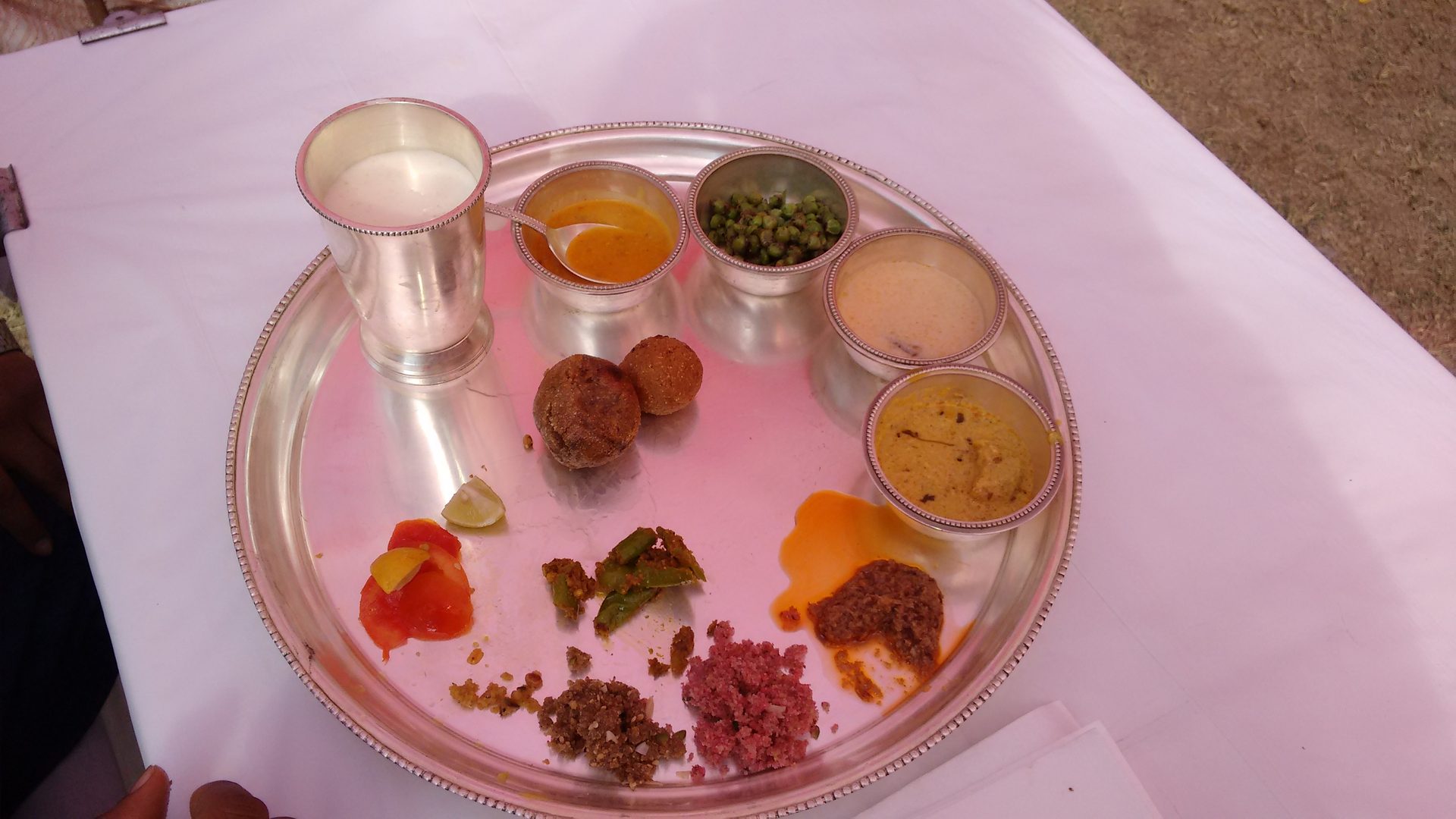
Rajasthani cuisine developed for a desert climate and a warrior culture that needed food that traveled and kept well — which is exactly why it’s so distinctive within Indian food more broadly.
The essentials
- Dal Baati Churma — baked wheat rolls crushed into ghee, served with lentils and a sweet crumble
- Laal Maas — a fiery Rajput mutton curry, best in Jodhpur and Udaipur
- Ker Sangri — a desert bean-and-berry curry, a Jaisalmer and Bikaner specialty
- Gatte ki Sabzi — gram-flour dumplings in a spiced yogurt gravy
- Ghewar — a disc-shaped, syrup-soaked sweet, best in Jaipur during festival season
Where to eat it
Jaipur’s Laxmi Misthan Bhandar (LMB) has served an excellent thali and ghewar since 1954. In Udaipur, look for a rooftop with a lake view for the best combination of food and setting. Jodhpur’s mirchi bada and makhaniya lassi are worth a dedicated stop, not just a side note.
A note on Pushkar
Pushkar is entirely vegetarian and alcohol-free within town limits, out of respect for its pilgrimage status — expect an excellent thali scene and a surprising number of good traveler-cafe options alongside it.
Eating your way through a route
Food is easiest to plan around a route. The Heritage Rajasthan Tour passes through Bikaner, Jaisalmer and Jodhpur, and our Rajasthan destination guides list restaurants city by city.
Questions
Quick answers
Some dishes, like laal maas, are genuinely fiery, but there’s a wide range — dal baati churma and gatte ki sabzi are much milder and approachable for most palates.
Very well — Rajasthan has one of India’s strongest vegetarian culinary traditions, and Pushkar in particular is entirely vegetarian.